top of page

- RESEARCH - RESEARCH - RESEARCH- RESEARCH- RESEARCH- RESEARCH- RESEARCH- RESEARCH- RESEARCH- RESEARCH -
RESEARCH
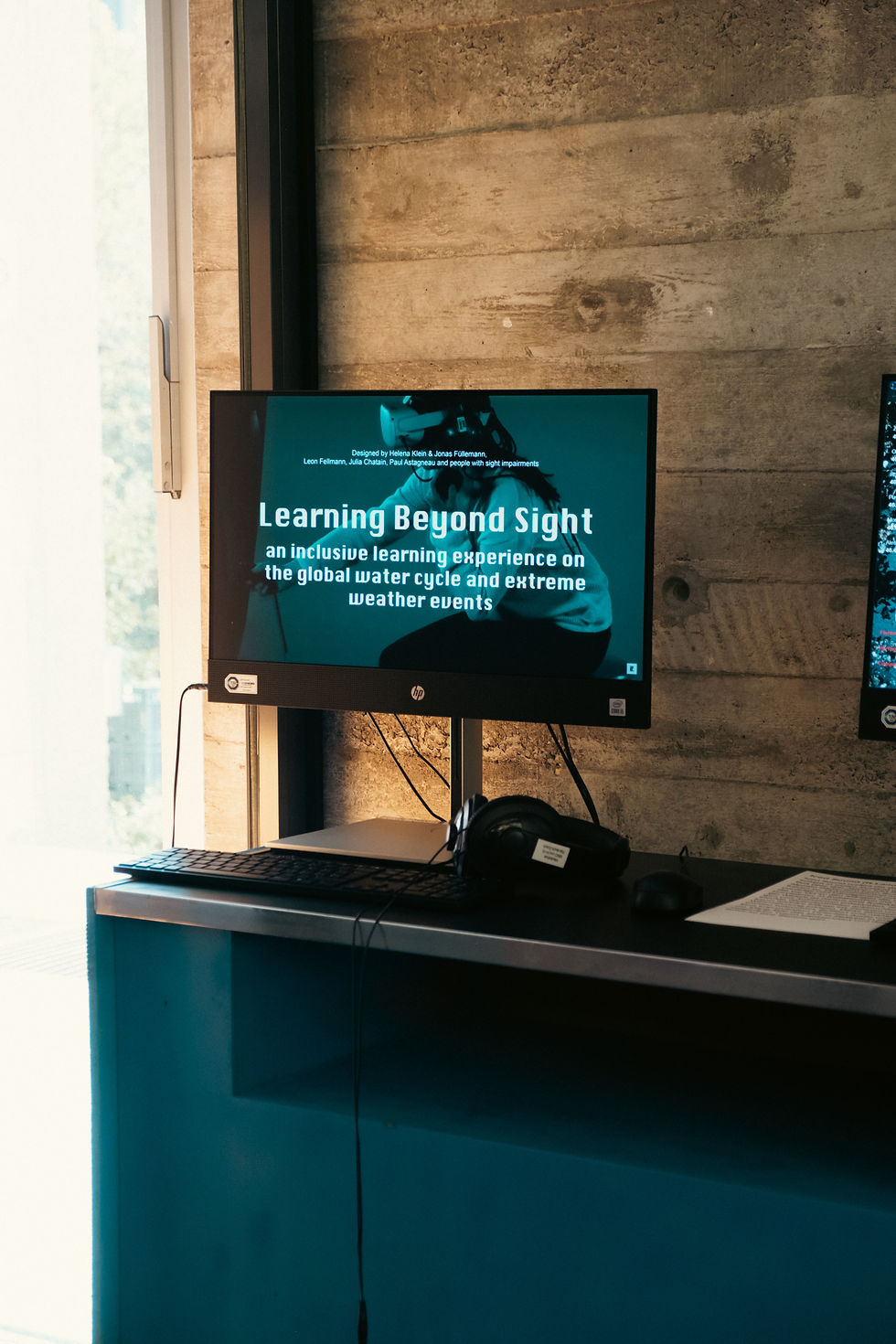
"LEARNING BEYOND SIGHT"
DESIGN MASTER'S PROJECT


Framework
More inclusive Visual Science Communication
In Cooperation with:
Jonas Füllemann (ZHdK)
Leon Fellmann (ETHZ)
Dr. Julia Chatain (former UTL at ETHZ)
Dr. Paul Astagneau (WSL, SLF)
Noemi Chow (ZHdK)
15 people with vision impairments
Funded by "Förderprogramm Nachhaltigkeit" from "Growing Sustainability in the Arts" ZHdK
Nominated for the "Förderpreis Design" ZHdK
This Master’s project explores how scientific content can be communicated through other senses than sight. Through research, prototyping, and collaboration, I developed a multisensory format that questions the dominance of the visual in science communication and offers an alternative multisensory approach.

Iterative, Participative Design Process
Design Principles
In my Master's Project I have developed 32 Design Guidelines which support the creation of a similar inclusive, multisensory, interactive VR infographic.
Medium & Form Choice
When learning about spatial or complex content, many people rely on mental imagery or visualization to help them memorize and understand the material. Research has shown that this cognitive process is amodal, meaning it is not tied to a single sensory modality. Therefore, haptics and sound can also support the formation of such mental models. Virtual Reality not only allows information to be conveyed through multiple senses but also enables the delivery of different levels of information through its interactive framework.
Research Question
This project explores the potential of virtual reality (VR) for inclusive knowledge transfer through the participatory design of an interactive visualization that can be discovered and experienced through haptic feedback and spatial sound.
About
Despite the benefits that visualizations can bring to the understanding and communication of socially relevant topics such as climate change, they are difficult to access for one in 24 people in Switzerland who live with a visual impairment. An inclusive learning experience engages multiple senses simultaneously, making complex information accessible to people with or without sight while supporting deeper understanding, engagement, and emotional connection.
Design process
The VR experience was developed in an interdisciplinary team consisting of people from the fields of computer, learning and climate sciences such as sound design, involving the target group of people with visual impairments through interviews, meetings and tests. This process led to the creation of an accessible, interactive, audio-haptic infographic about the global water cycle and its links to extreme weather events. Based on these findings, the project derived design guidelines to support the future development of inclusive visualisations using VR technology. Ultimately, these experiences can support multi-sensory, body-based learning and provide a new approach to experiencing visualisations that can benefit all learners.


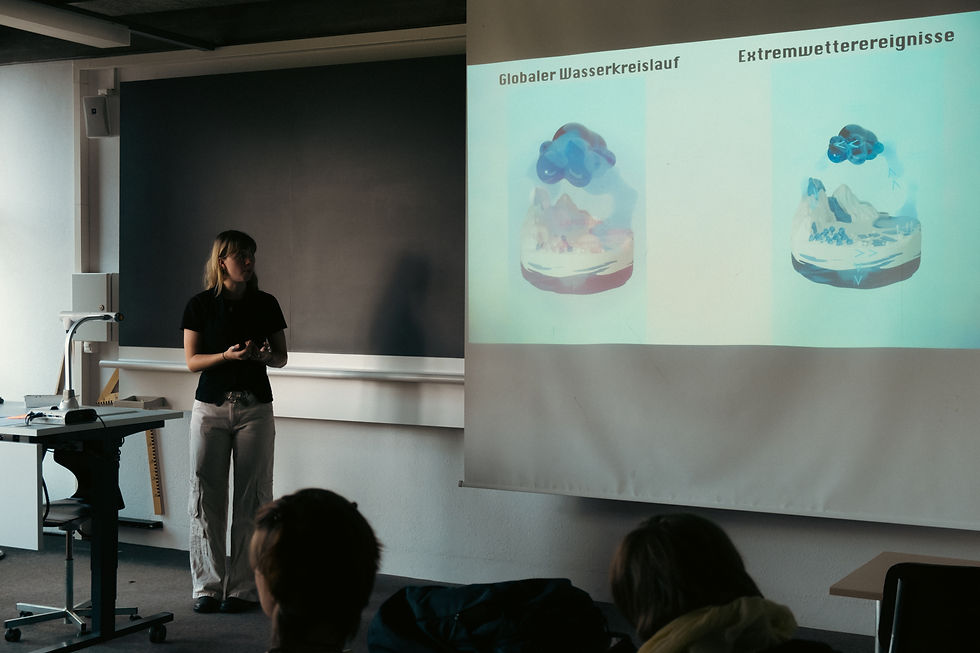
WORKSHOP WITH STUDENTS AT THE HIGH SCHOOL "MNG" IN ZURICH IN APRIL 2025




bottom of page